
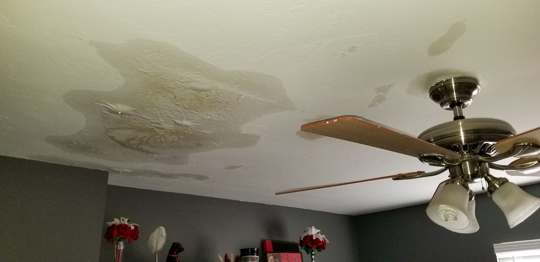
For many Omaha homeowners, a roof leak isn't obvious until water is literally dripping onto the floor. However, your home’s interior often provides subtle clues that moisture is breaching your exterior defenses well before a major ceiling collapse. Identifying these red flags early can be the difference between a simple maintenance fix and a complete structural overhaul. Understanding what to look for allows you to take action while the damage is still manageable and your insulation is still dry.
1. Water Stains on Ceilings and Walls
The most common sign of a leak is a "water map" or a tea-colored stain on your ceiling or upper walls. These spots often appear as faint yellow or brown rings that gradually expand over time. In many cases, these stains are found in corners or near light fixtures, where water naturally pools after traveling along a ceiling joist.
Because water is highly mobile, the stain you see might not be directly under the hole in your roof. It is important to monitor these spots during and after a heavy rainstorm:
- Darkening color: If the stain turns from light tan to a dark, damp brown during a storm, you have an active leak.
- Expansion: Mapping the edges of a stain with a pencil helps you track if the moisture area is growing.
2. Bubbling or Peeling Paint and Wallpaper
When water gets trapped behind your interior finishes, it disrupts the adhesive bond between the paint or wallpaper and the drywall. This often results in a "bubbled" appearance where the paint looks like it is stretching away from the wall. If you press on these bubbles and they feel soft or contain liquid, you are likely dealing with a significant moisture problem hidden within the wall cavity.
This issue is particularly common in bathrooms or kitchens where homeowners might mistake the peeling for simple humidity. However, if the peeling occurs near the top of the wall or around window frames, it is frequently a sign that water is infiltrating through the roof's perimeter flashing. Ignoring these bubbles allows mold to grow in the dark, damp space behind your finishes, which can eventually impact your home's air quality.
3. Persistent Musty Odors in the Attic or Upper Floors
Not all leaks are visible to the naked eye. Sometimes, the first sign of a breach is a lingering, earthy smell that doesn't go away with cleaning or air fresheners. This odor is caused by moisture that has soaked into your attic insulation or wooden framing members. When these materials stay damp without proper airflow, they provide the perfect environment for mildew to thrive.
If you notice a sudden change in how your upper floor smells, it is worth a trip to the attic with a flashlight. Pay close attention to these specific areas:
- The underside of the roof deck: Look for dark streaks or white, powdery mineral deposits known as efflorescence.
- Damp insulation: If your fiberglass or cellulose insulation looks matted, gray, or feels heavy, it has likely absorbed significant water.
4. Sagging or Warping Drywall
Drywall is a porous material that acts like a sponge when exposed to a roof leak. As it absorbs water, the weight of the material increases, causing it to sag or bow downward. This is a critical warning sign because wet drywall loses its structural integrity and can eventually fall, potentially causing injury or property damage.
If you notice your ceiling looks uneven or wavy when viewed from a side angle, the leak has likely been active for some time. Unlike a small stain, sagging drywall indicates that a large amount of water is being held in the ceiling cavity. This often happens near valleys in the roof where large volumes of rainwater are channeled during a typical Nebraska downpour.
5. Granules and Debris in the Gutters
While technically outside, your gutters are the early warning system for your interior. If you notice a heavy accumulation of shingle granules—which look like coarse sand—in your downspouts, your shingles are losing their protective coating. Without these granules, the asphalt matting is exposed to UV rays, leading to cracks that eventually allow water to seep into your home.
Checking your gutters twice a year can help you catch a leak before it ever reaches your ceiling. Keep an eye out for these specific red flags:
- Large chunks of shingle "teeth" or broken corners resting in the gutter trough.
- Rust spots or water marks on the underside of your soffits and eaves.
- Overflowing water that pours over the front of the gutter rather than through the downspout.
Ensuring Structural Integrity Through Professional Care
Spotting the signs of a leak is only the first step in protecting your investment. Because moisture often follows a path of least resistance through your rafters, the source of a drip can be difficult for an untrained eye to locate. Professional intervention ensures that you aren't just treating a symptom—like painting over a stain—but actually resolving the structural vulnerability. Addressing these issues promptly prevents the snowball effect where a small leak degrades your insulation, rots your framing, and ultimately leads to much higher repair costs down the road.
At TDH Contracting, we specialize in identifying hidden moisture entry points through our comprehensive roof inspections and shingle roofing services. Our team applies a technical approach to every project, ensuring that your home’s defense is restored using high-quality materials and locally-proven techniques. We also offer integrated siding and gutters solutions to ensure that water is properly diverted away from your foundation and interior walls. Whether you’ve noticed a small bubble in your paint or a mysterious attic odor, we provide the expert craftsmanship needed to keep your property dry and secure.
Don't wait for a small leak to become a major structural disaster. Contact the local experts at TDH Contracting today at (402) 539-5950 or book your professional inspection online to get a detailed evaluation before the next storm hits.